
Swarup also asserted that there was "full coordination" between home ministry and the ministry of external affairs on Rajnath's Islamabad visit.

Several Pakistani nationals visiting India started returning home through the Attari-Wagah land route in Amritsar on Thursday, a day after the Centre set a 48-hour deadline for them to leave the country. The decision came after India announced a raft of measures, including the expulsion of Pakistani military attaches, suspension of the Indus Water Treaty of 1960, and the immediate shutting down of the Attari land-transit post in view of the cross-border links to the horrific terror attack in Kashmir's Pahalgam that killed 26 civilians on Tuesday.
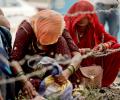
The Attari-Wagah border crossing point between India and Pakistan was shut completely on Thursday following a week-long heavy rush of people from either side to cross over after the Union government ordered all Pakistani citizens with short-term visa to leave India in the wake of the Pahalgam terror attack, sources said.
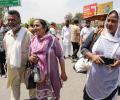
India has revoked all visas issued to Pakistani nationals effective April 27, advised Indian nationals in Pakistan to return home, and suspended visa services to Pakistani nationals. The move comes in retaliation to the Pahalgam terror attack that killed 26 people and alleged cross-border links to the attack. This escalation follows India's previous actions against Pakistan, including expelling Pakistani military attaches, suspending the Indus Water Treaty, and shutting down the Attari land-transit post.
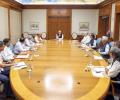
The Cabinet Committee on Security (CCS) met on Wednesday under the chairmanship of Prime Minister Narendra Modi and firmed up the responses to the terror attack.
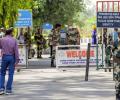
According to the Immigration and Foreigners Act 2025, which came into effect on April 4, overstaying, violating visa conditions, or trespassing in restricted areas could lead to three years in jail and a fine of up to Rs 3 lakh.
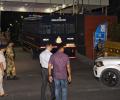
Tahawwur Hussain Rana, the key mastermind of the 2008 Mumbai terror attacks, is being interrogated for eight to ten hours daily by the National Investigation Agency (NIA) to unravel a larger conspiracy behind the strikes. Rana, who was extradited from the US, is being grilled by NIA investigators to probe a larger conspiracy behind the attacks, in which 166 people were killed and over 238 injured. He is being allowed to meet his lawyer and is being provided with basic necessities. The investigators hope to find some important leads on his travels in parts of northern and southern India days before the carnage in Mumbai on November 26, 2008.
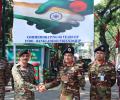
India has lodged a strong protest with Bangladesh over a now-deleted social media post by a key aide of Bangladesh's interim government that claimed certain areas of Indian territory should be part of that country. The post, which included a map showing parts of West Bengal, Tripura, and Assam as belonging to Bangladesh, was made by Mahfuz Alam, a de facto minister in the Muhammad Yunus-led interim government. The post sparked backlash and was subsequently deleted. India's External Affairs Ministry spokesperson Randhir Jaiswal reminded all concerned to be "mindful" of their public comments and emphasized the need for responsibility in public articulation.

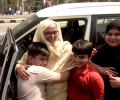
Following a deadly terror attack in Pahalgam, India has ordered all Pakistani nationals to leave the country within 48 hours. This has led to a mass exodus of Pakistani citizens from India, while several women married to Pakistani nationals and holding Indian passports are facing difficulties returning to their families in Pakistan.
Soon after the Union Ministry of Culture decided on refusing US dollar payments for entry tickets to monuments in Agra due to the falling value of dollar against the Indian rupee, the Archaeological Survey of India is planning to lower the entry ticket cost for tourists belonging to the South Asian Association for Regional cooperation (Saarc) countries, bringing it down from Rs 750 to Rs 20.

In a face saver, SAARC countries signed a framework agreement on cooperation in power sector but failed to finalise the much-awaited motor vehicle and railway pacts
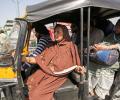
The exit deadline for Pakistani nationals visiting India on SAARC visas ended on April 26, while for the rest, except those on medical visas, it is set to close on Sunday, April 27 amid escalating tensions between the two countries over the Pahalgam terror attack that killed 26 people.

Leaders of Afghanistan, Bangladesh and Bhutan have also decided not to attend the summit, which now has to be cancelled as per the SAARC charter.

From traditional Nepali thali to Gujarati basundi with jalebi, it was a lavish vegetarian spread of cuisines laid out for the SAARC leaders as they met in the cooler climes of exotic Dhulikhel resort for a retreat session.
The present government had removed the need for clearance from Dhaka for Pakistani heads of missions while issuing visas, Bangladesh high commissioner to Pakistan Iqbal Hussain told the business community here at the Lahore Chamber of Commerce and Industry on Saturday.
Connectivity is what SAARC needs the most but Pakistan is not interested, says Rajeev Sharma.
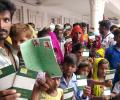
Pakistani Hindu refugees residing in Delhi's Majnu Ka Tila are experiencing anxiety over their visa status despite government clarifications regarding Long Term Visas (LTVs). The government's decision to revoke all visas issued to Pakistani nationals, following heightened tensions between India and Pakistan, has left many refugees worried about their future. While LTVs for Hindu Pakistani nationals remain valid, the renewal process every two years and ongoing citizenship applications under the Citizenship (Amendment) Act, 2019, have fueled concerns. The Delhi Police has initiated a verification drive, adding to the unease among the refugees, who fear being uprooted yet again. The article highlights the plight of these refugees, who have fled Pakistan seeking a better life in India, and the uncertainties they face in the current political climate.

Indian journalists, who went to cover the SAARC Home Ministers' conference in Islamabad, had to face hostile Pakistani officials.
A three-day meet on 'Science-based agricultural transformation towards alleviation of hunger and poverty in the SAARC countries' will discuss the regional agrarian situation, encompassing food insecurity and poverty and suggest necessary policy and programme shifts to meet the Millennium Development Goals.
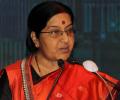
India on Thursday pitched for unleashing the "collective strength" of the South Asian Association for Regional Cooperation as External Affairs Minister Sushma Swaraj underlined the need for a South Asian Economic Union with greater connectivity and forward movement on pending agreements on rail and motor vehicles.

It is expected that this meeting could possibly pave the way for a meeting between Prime Minister Narendra Modi and his Pakistani counterpart Nawaz Sharif in the US later this month.
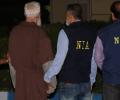
The National Investigation Agency (NIA) has begun questioning Tahawwur Hussain Rana, the mastermind behind the 2008 Mumbai terror attacks, to uncover the larger conspiracy behind the deadly strikes. Rana, who was extradited from the US, is being held at the NIA headquarters in New Delhi. The interrogation is focused on his possible connection with the Lashkar-e-Taiba (LeT) and his suspected links with the Pakistani spy agency Inter-Services Intelligence (ISI).

President Pranab Mukherjee on Monday night hosted a dinner for visiting South Asian Association for Regional Cooperation leaders and Prime Minister Narendra Modi where the guests were treated to a variety of dishes drawn from various parts of the country.

The 2016 SAARC Summit was originally planned to be held in Islamabad on November 15-19, 2016. But after a terror attack on an Indian Army camp in Uri in Jammu and Kashmir on September 18 that year, India expressed its inability to participate in the summit due to "prevailing circumstances". The summit was called off after Bangladesh, Bhutan and Afghanistan also declined to participate in the Islamabad meet.
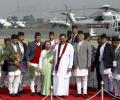
Prime Minister Narendra Modi and leaders of other South Asian Association for Regional Cooperation countries will meet in Kathmandu on Wednesday with an aim to revitalise the regional grouping and make it a major platform to fuel economic growth through liberalised trade and combat challenges of terrorism and climate change effectively.

Raising the Kashmir issue at the SAARC meeting, Pakistan's Interior Minister Chaudhry Nisar Ali Khan on Thursday alleged that the violence being committed in Kashmir is "open terrorism".

In his opening address, Prime Minister Modi said the South Asian region has reported less than 150 coronavirus cases, but "we need to remain vigilant". "Prepare, but don't panic" has been India's guiding mantra in dealing with coronavirus outbreak, he said.

India should encourage the second coming of SAARC with climate change as an urgent agenda and keeping Indian security concerns in mind as the subtext, suggest Lieutenant General Ashok Joshi (retd) and Colonel Anil Athale (retd).

Indian motorcycle maker Royal Enfield on Tuesday announced starting a manufacturing unit and a showroom in Bangladesh, marking a major industrial development in the neighbouring country where the former prime minister Sheikh Hasina fled in August after weeks-long protests against her. The manufacturing facility in Chauddagram in Cumilla district is Royal Enfield's sixth outside India and besides the one in Tamil Nadu. Royal Enfield, the global leader in the mid-size motorcycle segment, has set up the facility in collaboration with IFAD Motors.

Pakistan will not engage with India 'until and unless they lift the siege' in Kashmir, it said.
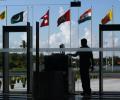
India, along with some other members, objected to the proposal and due to lack of consensus or concurrence, the meet has been cancelled.
SAARC summit in Islamabad in jeopardy. A SAARC summit can only take place when leaders of all member countries are present, notes Rajeev Sharma.

From a few rain gauges in 1875 to rivalling the world's best weather agencies, the India Meteorological Department (IMD) has weathered its way to becoming a global leader in forecasting.
Tahawwur Hussain Rana, a key accused in the 26/11 Mumbai terror attacks, was brought to India on Thursday after being "successfully extradited " from the US, the National Investigation Agency (NIA) said. The 64-year-old Canadian citizen of Pakistani origin landed in Delhi in a special plane on Thursday evening, ending days of speculation of when and how he will be extradited, officials said. The NIA said in a statement that it had secured the successful extradition after years of sustained and concerted efforts to bring to justice the key conspirator behind the 2008 mayhem that claimed 166 lives. Rana is accused of conspiring with David Coleman Headley alias Daood Gilani, and operatives of designated terrorist organisations Lashkar-e-Taiba (LeT) and Harkat-ul-Jihadi Islami (HUJI) along with other Pakistan-based co-conspirators, to carry out the the three-day terror siege of India's financial capital.

Tahawwur Hussain Rana, a Pakistan-born Canadian national and close associate of David Coleman Headley, is set to be extradited to India from the US. Rana was involved in the planning and execution of the 2008 Mumbai terror attacks, which killed 166 people, including six Americans. He assisted Headley in obtaining a visa for India, established a front company in Mumbai, and helped in reconnaissance of targets in Mumbai and New Delhi. Rana was convicted in the US for providing material support to Lashkar-e-Taiba (LeT) and sentenced to 14 years in prison. His extradition to India will allow authorities to question him about his involvement in the Mumbai attacks and potentially uncover new information about the role of Pakistani state actors.
Tahawwur Hussain Rana, a Pakistan-born Canadian national and close associate of David Coleman Headley, could be extradited to India in connection with the 26/11 Mumbai terror attacks. Rana's travel history in parts of north and south India before the attacks in 2008 is expected to provide crucial leads for the investigation. His extradition would mark the third person to be tried in India for the attacks, after Ajmal Kasab and Zabiuddin Ansari alias Abu Jundal.

On a day when the sixth anniversary of Mumbai attack was being observed, Prime Minister Narendra Modi on Wednesday told South Asian Association for Regional Cooperation leaders that India feels the 'endless pain' of lost lives and urged the eight- nation grouping to combat terrorism unitedly.

'We operate in 16 countries already, and therefore adding the UK to it, and beginning a chapter in the European continent is the next step.'
 © 2026 Rediff.com - Advertise with us - Disclaimer - Privacy Policy - Sitemap - Feedback - About us - Terms of use - Grievances